
 cathy@migodesk.com
 Click to WhatsApp (Cathy Liu)

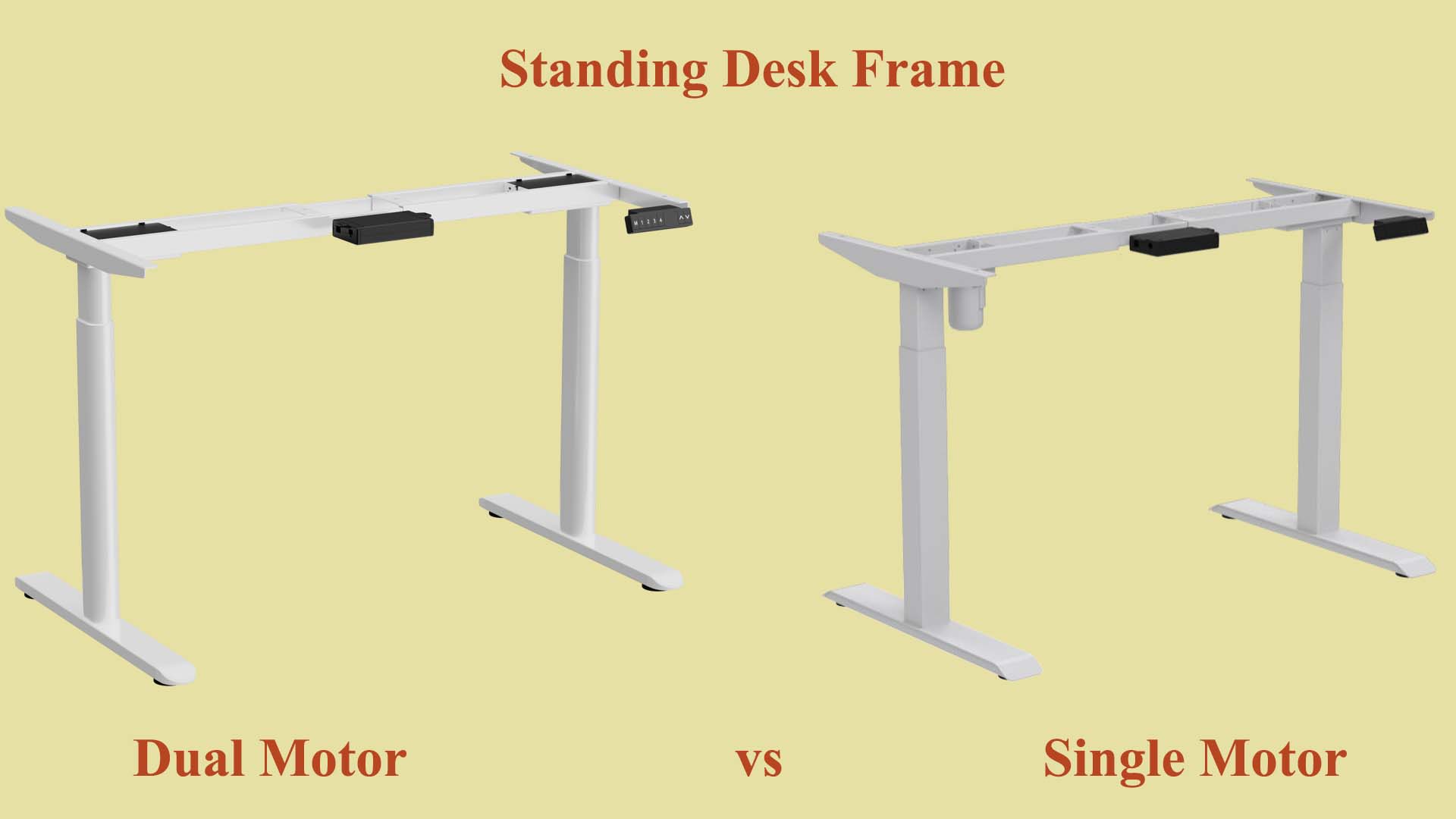
Single-motor standing desks typically use 2-stage square legs for a combination of mechanical, cost, and functional reasons. Here’s a detailed analysis:
1. Motor Power and Load Capacity Limitations
- A single motor has limited torque and lifting force compared to dual-motor systems.
- 2-stage legs have a shorter total extension range (typically ~16–20 inches of travel), which reduces the mechanical load on the motor.
- Adding a third stage would increase the leverage and instability, requiring more power—something a single motor often can’t provide efficiently or reliably.
✅ Result: 2-stage design keeps the required lifting force within the capabilities of a single motor.
2. Structural Stability and Rigidity
- Square legs (as opposed to round or C-shaped) offer better resistance to lateral wobble due to their geometry and larger cross-sectional moment of inertia.
- However, with each additional telescoping stage, rigidity decreases significantly.
- A 3-stage leg, especially when fully extended, becomes much less stable—particularly under asymmetric loads (e.g., monitor on one side).
- Single-motor desks often lack the counterbalancing effect of a second motor, making stability even more critical.
✅ Result: 2-stage square legs strike the best balance between height adjustability and minimal wobble for a single-motor system.
3. Cost and Manufacturing Simplicity
- Fewer stages = fewer parts, simpler assembly, lower material cost.
- Single-motor desks are usually positioned as budget-friendly options.
- Adding a third stage increases complexity (more inner tubes, seals, guides) without proportional benefit if the motor can’t support it well.
✅ Result: 2-stage design aligns with the economic positioning of single-motor desks.
4. Height Range Sufficiency
- Most users (roughly 5’0″ to 6’3″) can be accommodated with a height range of ~28″ to 46″, which is achievable with 2-stage legs on a standard desktop thickness (~1″).
- While 3-stage legs enable lower minimum heights (useful for very short users or thick tabletops), this is often unnecessary for average use cases.
✅ Result: 2-stage legs provide adequate ergonomic coverage for most users.
5. Synchronization Simplicity
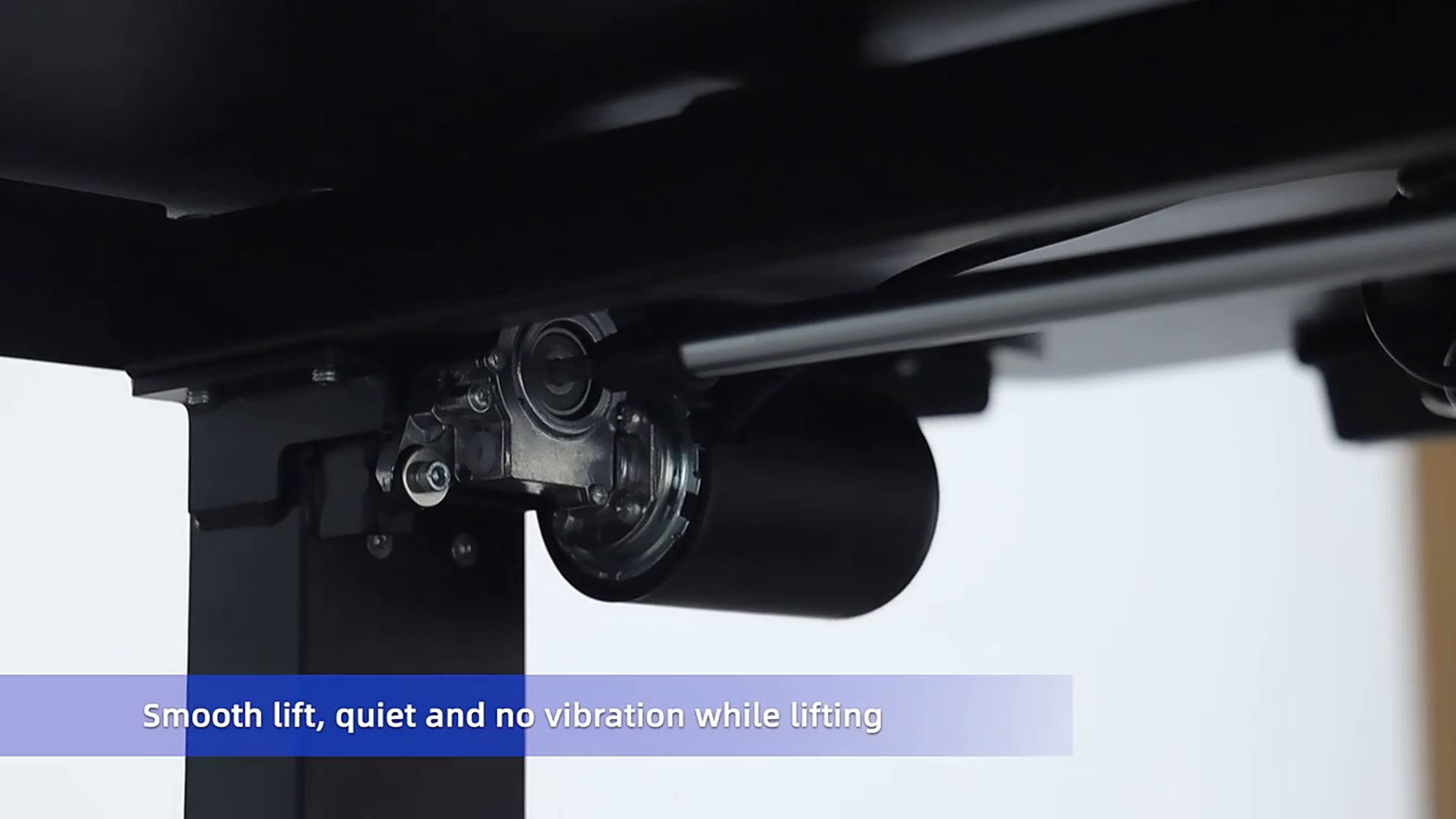
- In a single-motor desk, the motor drives both legs via a long shaft or belt.
- With only two stages, synchronization between left and right legs is easier to maintain mechanically.
- More stages could amplify small timing or friction differences, leading to binding or misalignment.
✅ Result: 2-stage legs reduce risk of mechanical desynchronization.
Summary Table
| Factor | Why 2-Stage Square Legs? |
|---|---|
| Motor Power | Matches torque limits of single motor |
| Stability | Minimizes wobble; square profile adds rigidity |
| Cost | Lower part count & simpler manufacturing |
| Height Range | Sufficient for majority of users |
| Synchronization | Easier to keep legs aligned with fewer stages |
Exception Note:
Some premium single-motor desks do use 3-stage legs—but they often sacrifice speed, noise level, or maximum load capacity. These are less common and typically target niche markets (e.g., users needing very low sitting heights).
Conclusion:
The dominance of 2-stage square legs in single-motor standing desks is a deliberate engineering trade-off that optimizes performance, stability, cost, and usability within the constraints of a single actuator system.